
Love’s Intuition
Posted on November 17, 2025 Leave a Comment

No one has to teach you. You already know how to do this. It’s natural. Intuitive. Automatic. And sometimes it gets out of control, revealing that things are more disordered in our lives than we would like to admit.
Leave it to comedians to point it out. They’re at least merciful in their critiques. They make us laugh instead of simply despairing. Well, maybe there’s still some despair in there too. Jim Gaffigan is a master at walking the line of humor, critique, and despair. He’s endearing because most of the laughs are at his own expense.
Lampooning the extremism of exercise culture (it’s funny because Jim is out of shape), Gaffigan exposes the absurdity of all the mirrors that line our sweat factories. Granted, it’s helpful to see if you’re doing an exercise correctly, but, if we’re honest, that accounts for less than 10% of total mirror usage. The rest of the time we’re either glorying in self, hyper-critiquing self, or manically comparing self to other selves nearby (and wondering what they’re thinking about self).
Into this context, Gaffigan interjects a humor-drenched critique. Assuming the voice and cadence of a “gym-bro,” he gets on a roll:
“If I’m going to work out, I want to look at something… like myself. I wanna look at myself while I work on myself. I should do a recording so I can listen to myself, while I look at myself, while I work on myself. As I leaf through my Self Magazine, read how myself can improve myself. Maybe I’ll go to my Facebook page and post photos of myself. Read what myself has written about myself. Yo soy muy importante.”
Hysterical and cutting, right? Gaffigan calls out our rampant self-involvement and incessant pursuit of self-improvement. And it stings. But while we’re all guilty here to some degree, Gaffigan also illuminates something natural and good about us. The thing no one has to teach you. And that thing is to love and attend to yourself.
Self-Love
We automatically, instinctively care for ourselves. We naturally avoid discomfort and expend great amounts of effort and energy to ensure that we have what we need and even want. Think about it. When it comes to food, sleep, attention, pleasure, help, healing, friendship, and more, we subconsciously pursue what we think we need. Self-love is intuitive. And that’s not necessarily a bad thing. Where it goes wrong is in its relation to love for God and love for neighbor. When self-love overtakes the rightful priority of other loves and saps the energy that ought to be devoted to them, the brightness of humanity fades.
I was a Christian school kid. So that meant we talked about the Bible and God-stuff every day. Even in P.E. My teacher had a mantra that we all were required to act out each day at the beginning of class. It had to do with various loves and their priority. We would start with both of our hands extended to the right and left and declare what we loved in descending order as we moved our hands and arms inward. We would start with God, while our arms were fully extended. And then move inwards to say “others.” Next, we moved them closer and would say “self.” Then, “things and activities.” And, finally, with gusto, we would smack our hands together and say “sin” (meaning sin was in no way to be loved).
While this was to me an innocuous and maybe even silly part of my childhood, it contains more profundity than I realized. There indeed is a God-ordained priority for our loves. St. Augustine wrestled this concept out of Scripture for us, summarizing,
“My weight is my love. By it I am carried wherever I am carried. By Thy gift [of the Spirit], we are enkindled and are carried upward.”[1]
We were made out of God’s eternal three-in-one love within Himself. And we were made to share in that love, carried or ascending upwards – and then radiate it outwards to others. But it is all intended to start with the love for God. The love that is inevitably drawn out of us when we catch a sight of His great love for us in Christ, believing in His truth and power. However, this is not my present point.
Neighbor Love
The love of God ought to be, unsurprisingly, at the top of the love priority list. But what’s next? According to my P.E. teacher it ought to be others. This sounds good, but is it correct? Probably. But a recent reading of Luke 10:25-37 gave me new insight into the priority of our loves and what loving our neighbor as ourselves entails.
In this passage, a law-expert questions Jesus about what must be done to inherit eternal life. The scene feels reminiscent of Jesus’s interaction with the rich young ruler (Mark 10:17ff). Jesus asks the law-expert how he reads it and he correctly answers by quoting Deuteronomy 6:5: “You shall love the Lord your God with all your heart and with all your soul and with all your strength and with all your mind, and your neighbor as yourself.” Jesus affirms the man’s answer and tells him that he will live if he obeys this law.
You would think the scene might end here, but then we get insight into the man’s heart. We’re told that in “desiring to justify himself” he asks Jesus a further, impertinent question: who is my neighbor? Answering, Jesus gives the famous Good Samaritan parable, which boxes the man into admitting that the Samaritan was the true example of neighbor love.
The parable is the vivid picture that animates the principle: “You shall love… your neighbor as yourself.” How should we love others? As we love ourselves. And how well and naturally do we love ourselves? Devotedly. Automatically. Intuitively.
And this brings me to my point, to my new insight. If we’re going to learn how to love our neighbor well, we must understand how we naturally love ourselves. We have a built-in, God-given intuition to care for ourselves – our bodily and relational well-being. We expend constant, consistent energy and effort towards this end. It’s natural and subconscious (and often, in the case of workout mirror-watching, overly conscious).
So, to love our neighbor means to love them on par with the same intuitive care and effort that we love and care for ourselves. To grow in love means to steadily raise our intuitive awareness of the needs of others. It means to develop our reflex to meet their needs as we have the resources to do so. And proximity matters (as we see in the Samaritan’s case).
Loves In Line
So, am I disagreeing with my P.E. teacher? Sort of. Should we love others more than ourselves? I’m not sure that’s what the Scripture says. But I do think we should love our neighbor in the same way, to the same degree, and with the same intuition that we love ourselves. I agree with the Apostle Paul that we should “count others as more significant” than ourselves (Philippians 2:3). But I also recognize the inevitable necessity of having to “put on your own oxygen mask first,” like flight attendants remind us.
Furthermore, I recognize that our self-love is far from pure. Our sin nature has us looking more at ourselves in a mirror than gazing on God. We are beholden to vain trifles rather than beholding God’s transformative glory, which would reorder and redirect our loves. This would give us peace, like puzzle pieces falling into place.
However, all this to say, what I do see more clearly is love’s intuition. And heart’s intuitive powers need a dramatic redirection. But with the Savior at the center, sin gets subdued. And when the Lover becomes our Lord, loves reorder as rhythm meets rhyme. Then we can translate what no one had to teach us into what the Teacher typified.
[1] Confessions, Book XIII, 9.
Mountains Rise
Posted on October 2, 2025 Leave a Comment

Mountains rise
Before me

I wish I could
Run my hand
Across the crest of them

As one caresses
A pup’s head
Noble and watchful

Lined uniquely
With purposed shape
Beautifully invigorated

Yet they are big
And I small

In stature
But not so
In heart and spirit

Would I one day
Become their master
Dignified in gratitude?
This poem was written at my parents’ house in North Georgia sometime last year. They have a beautiful view of the Blue Ridge Mountains.
Blitz
Posted on September 25, 2025 1 Comment

Blitz me bleary-eyed
Unnumbered thoughts, encumbered
Words washing over down
An ever-moving stream

Successive excesses
Rush, a burst breaking
Steady in suit
Scattering light, sense

A rained on sop
Shaken top through
Written on a frenzied, rainy December day in Texas. Unfinished, but maybe it’s enough. Ever had this feeling?
Tracing the Line
Posted on September 18, 2025 Leave a Comment

At a glance unseen
Crystalline tendril
Leading up and on

Stout in sway
Shining, lighting
The path home

Heaven and earth
Spanned somehow
Before very view

Ever present lining
Daily anew, renewing
Hope, bright possibility

Gift for all
Conditioned only
For the still, slowed

Whose way seen
As light angles
Angels upward go
This poem was written on my back patio last Spring in a moment of inspiration while trying to notice all the small, beautiful realities all around me.
Come Anyway
Posted on December 26, 2023 Leave a Comment

Far from my first
Year yearning, pressing
Prepare room, rustle
Awake my sleepy soul

Snapping to, too late
Lagging as one seized
Shamed by the frenzy
Of a foe’s drubbing

Blushed, struck seeing
A visage true-shaped
Sharp similitude staring
Sullen, mulled over-down

I am not ready
There is no room

Yet you come, ready
Not pen-clicking,
Reviewing wrongs
Down the nose, gnashing

You come anyway
Full well, knowing
And still loving until
Still slows me to center

Increasing where decreased
Gov’t growing only good
Zeal, peeling to pit
Resounding joy for the unready
This poem was written while reflecting on Isaiah 9:6-7, this episode of The Brothers Zahl podcast, and the liturgy and prompts in Every Moment Holy‘s 2023 Advent Journal. The picture above is from the show Friends.
The Arithmetic of Grace
Posted on December 24, 2023 Leave a Comment
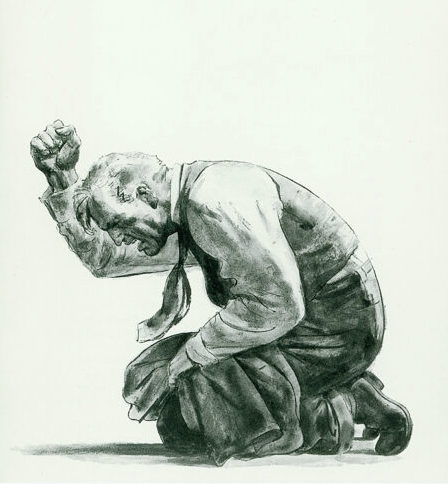
A shadow at midday
Abject terror piercing through crowds
There’s more than one way
To feel alone

The slow, sad ache
Of light edging away
Like sand through
The glass slipping

The corrosive among us
Immoral
Specter of self-sufficiency
A rusting pretense separates all

Machined down
We don’t touch anymore
Passing by, reduced
Down in the deepening dark

What light breaks
Shines in through the cracks
Stopping, reversing
The rot’s rout

Great enough
To stall the spirits’ stalk
Bring eyes, hands
To meet, to mend

Dividing spoil, multiplying joy
Only the arithmetic of grace
Can see and ‘summate
Solitary souls
This poem was written while reflecting on Isaiah 9:2-3, a quotation from Arthur Miller (found in this article), and the liturgy and prompts in Every Moment Holy‘s 2023 Advent Journal. The sketch above from the cover of Miller’s Death of a Salesman for Penguin Classics.
Dwell Different
Posted on December 6, 2023 Leave a Comment
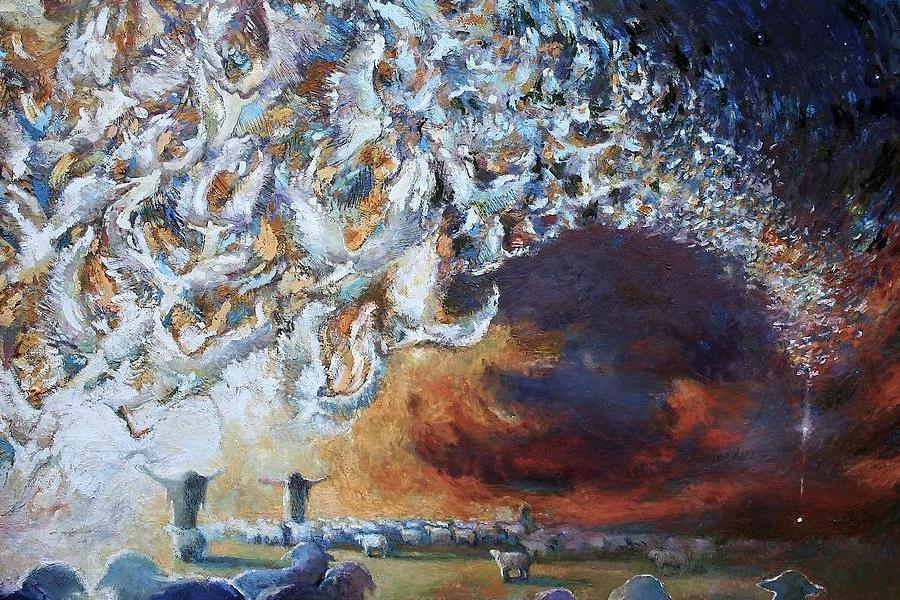
My Papa first
My uncle second
Read the story

Of light
Of surprise
Of the Timeless interrupting time

Just like Linus
Simple and sweet
Clearing chatter
Putting meaning at the center

Those lying in fields
Like us lounging on couches
Would ever dwell different
Going to see
This thing that has happened
This poem was written while reflecting on Luke 2:8-15 and the liturgy and prompts in Every Moment Holy‘s 2023 Advent Journal. The painting above is Seeing Shepherds by Daniel Bonnell.
Tears Remain
Posted on March 29, 2023 Leave a Comment

When the flood of words
And surge of shock
Run dry
Tears remain

Could they forever flow
In the dark
In the deep
Detached disintegration?

We are scattered and strewn
In the valley stretching
On and across
A vast expanse of pain

Like bones
Dry, very, very dry
Misplaced and displaced
Disordered in decay

While death seals
What the violent steals
Weeping saints’ tears pool
The only sign of life

Tears and prayers
Mixing and mingling
With faces on the floor
Pressed flat in grief

The sole hope that
They might kindle, assemble
New life and love
If Christ breathes, speaks, weeps

Yet hope is lost
Indeed cut off
While you waited
And we waited

Could we come forth?
Could they come back?
Tears and prayers
Spirit upheld, interceding

Our bitter yet sweet
Reaching out and up
As your tears wash
And hands hold us
This poem was written after meditating on Ezekiel 37:1-14, Psalm 130, John 11:1-44, and Hebrews 11 as well as while grieving the awful tragedy that occurred on Monday at the Covenant School in Nashville, TN. Kyrie elision!
Again, much thanks to the folks at Every Moment Holy and the reading and reflection prompts in their 2023 Lenten Journal.
Deep Down Good Things
Posted on March 22, 2023 Leave a Comment

There is a sorrow
That seems endless
Like a rope
Pulled and pulled

There is a darkness
That stretches out and on
Like a cave
Deeper and deeper

There are foes
That hate and plot
Like wolves
Pursuing, pursuing

There are gods
That promise and shame
Like a warden
Beating on, beating down

How long?

Could sorrow
End and resolve
Like a melody
Perfectly composed?

Could darkness
Sharpen and contrast
Like a portrait
Where light is spilled?

Could foes
Fall to knees
Like one undone
By mercy and grace?

Could gods
Be driven out
Like exposed hucksters
Husk traded for the real, free?

Beloved
The deep down good things
Will never die
You are loved, still
This poem was written after meditating on Isaiah 42, Psalm 13, Psalm 36, John 9:1-38, and 1 John 1. Again, much thanks to the folks at Every Moment Holy and the reading and reflection prompts in their 2023 Lenten Journal.
The Weight of Dreams
Posted on March 14, 2023 Leave a Comment
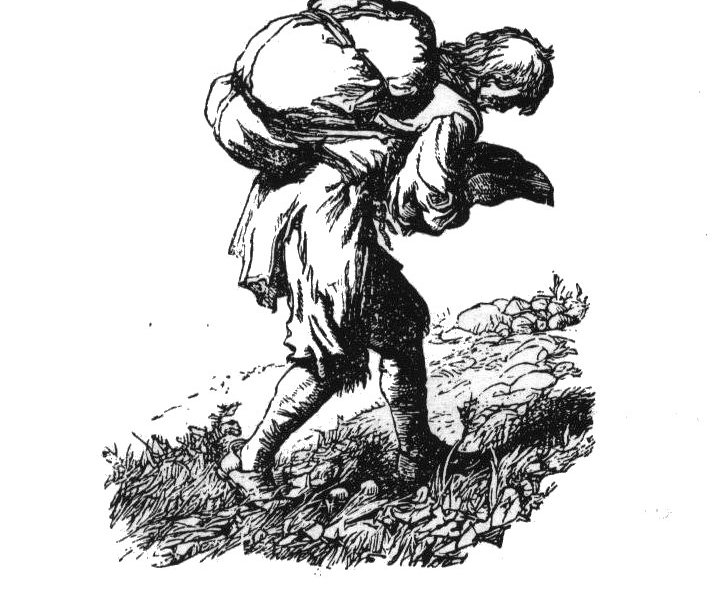
How much do dreams weigh?
Desires of the heart
Ambitions of youth
Fixations of attention

And how much when they die?
Shards of imagination
Fragments of hope
Dust of intention

How heavy they are!
Lifeless loads
Burdens of brokenness
Jars of salt water

We thirst

But what’s the cost?
To lay them down
To account the loss
To grieve what’s gone

Drink deeply

A draught of new dreams
Not from a native stream
But flowing from a vernal source
The One among you still

Collapse lays the ground
Tilled and turned over
Opened and freed
To drink and dream again
This poem was written after meditating on Exodus 17:1-7, Psalm 42, and John 4:1-42. Again, much thanks to the folks at Every Moment Holy and the reading and reflection prompts in their 2023 Lenten Journal.
 Moment-By-Moment